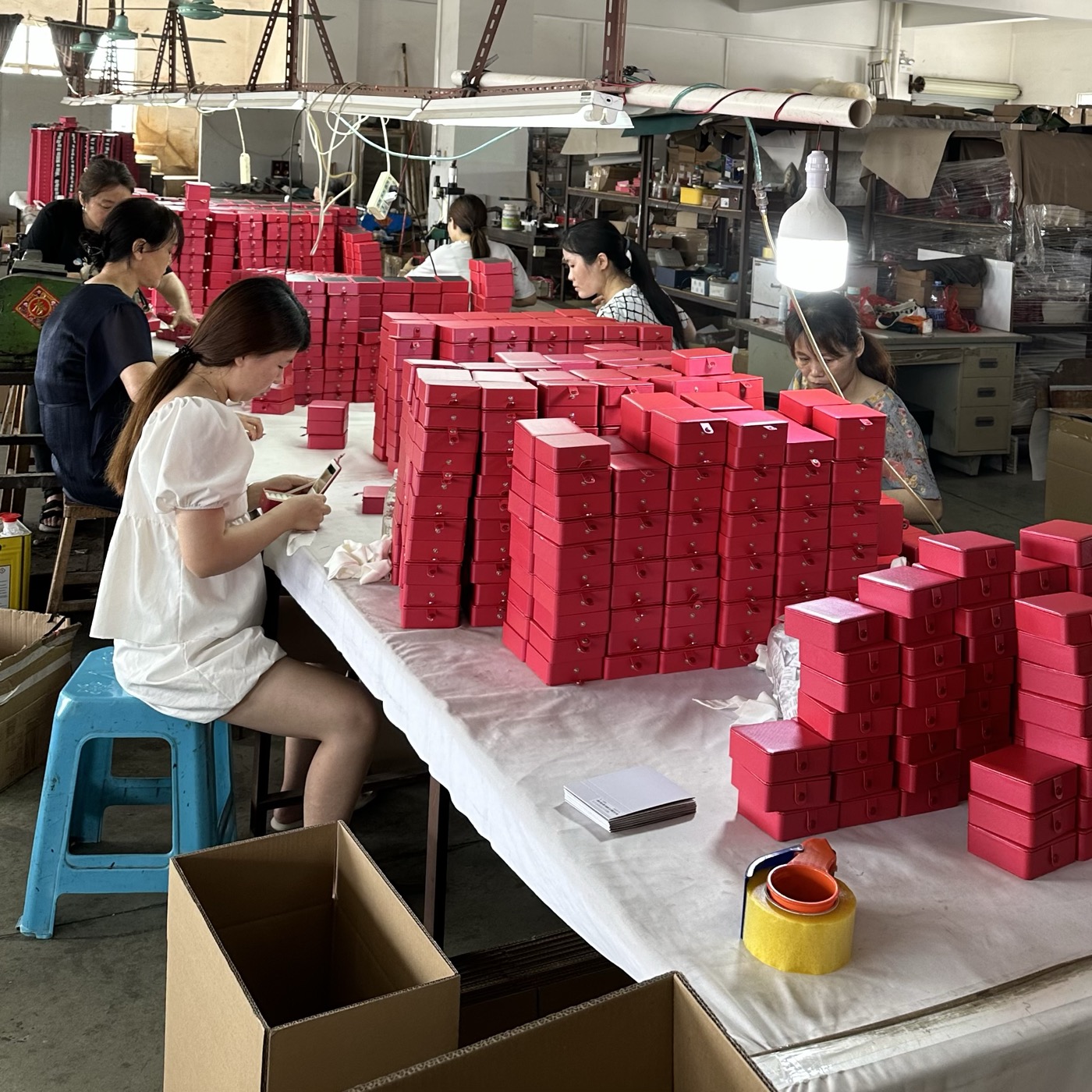
What this construction is
A tray and sleeve is a shallow rigid tray that slides into an open-ended outer sleeve. The sleeve carries the print or the branding and the tray carries the piece, so the two can be changed independently.
Velvet on this construction, specifically
The sleeve should not be velvet. It is the part that slides, and velvet against velvet drags; a printed or laminated sleeve over a velvet tray is the build that works and it is also the cheaper half to reprint.
Getting the fit right
The sleeve is where the brand lives, and it is the cheapest part to reprint. A retailer who changes packaging design every season can keep one tray specification and reprint only the sleeve, which is the practical argument for this construction.
The mistake to avoid
A sleeve that fits the tray exactly will not go on once the tray is wrapped. The clearance is set from the wrapped tray, not the bare one, which sounds obvious and is the most common measuring error we see.
Where it is used
Seasonal and campaign packaging, e-commerce, and any programme where the design changes more often than the box does.
Why velvet
Velvet is a cut-pile fabric with a longer, softer nap than microfibre suede. It is the traditional jewellery lining and still the one most buyers associate with a gift.
Putting your logo on velvet
Velvet does not hold a hot-stamp the way board or leatherette does. A metal plate, or a lid card, is the more reliable way to carry a logo on a velvet exterior.
Cutting the interior in velvet
A velvet slot closes on the shank under its own spring. The pile hides the cut edge, so the slot can be made slightly generous without looking loose.
Brush with the pile. Avoid pressing a heavy piece into the same spot for months at a time, or the pile takes a set.
What we need from you
| What we need | Why |
|---|---|
| Piece dimensions | Sets the interior |
| Velvet colour | Matched to a Pantone reference or a swatch |
| Logo artwork | Vector gives the cleanest die or screen |
| Velvet on this construction | The sleeve should not be velvet. |
Frequently asked questions
Is velvet a good choice for a tray and sleeve box?
The sleeve should not be velvet. It is the part that slides, and velvet against velvet drags; a printed or laminated sleeve over a velvet tray is the build that works and it is also the cheaper half to reprint.
How does velvet wear on this construction?
Brush with the pile. Avoid pressing a heavy piece into the same spot for months at a time, or the pile takes a set.
Can it be made in our colour?
Yes — the velvet is matched to a Pantone reference or a physical swatch, and confirmed on a sample.
What logo methods suit velvet?
Velvet does not hold a hot-stamp the way board or leatherette does. A metal plate, or a lid card, is the more reliable way to carry a logo on a velvet exterior.
Can I see it before ordering?
Yes. A physical pre-production sample is made to your specification and the bulk run is held to the sample you approve.
Make your tray and sleeve boxes
Tell us the piece, your brand and the quantity you have in mind. We’ll send photos of our work and one clear, all-in quote.