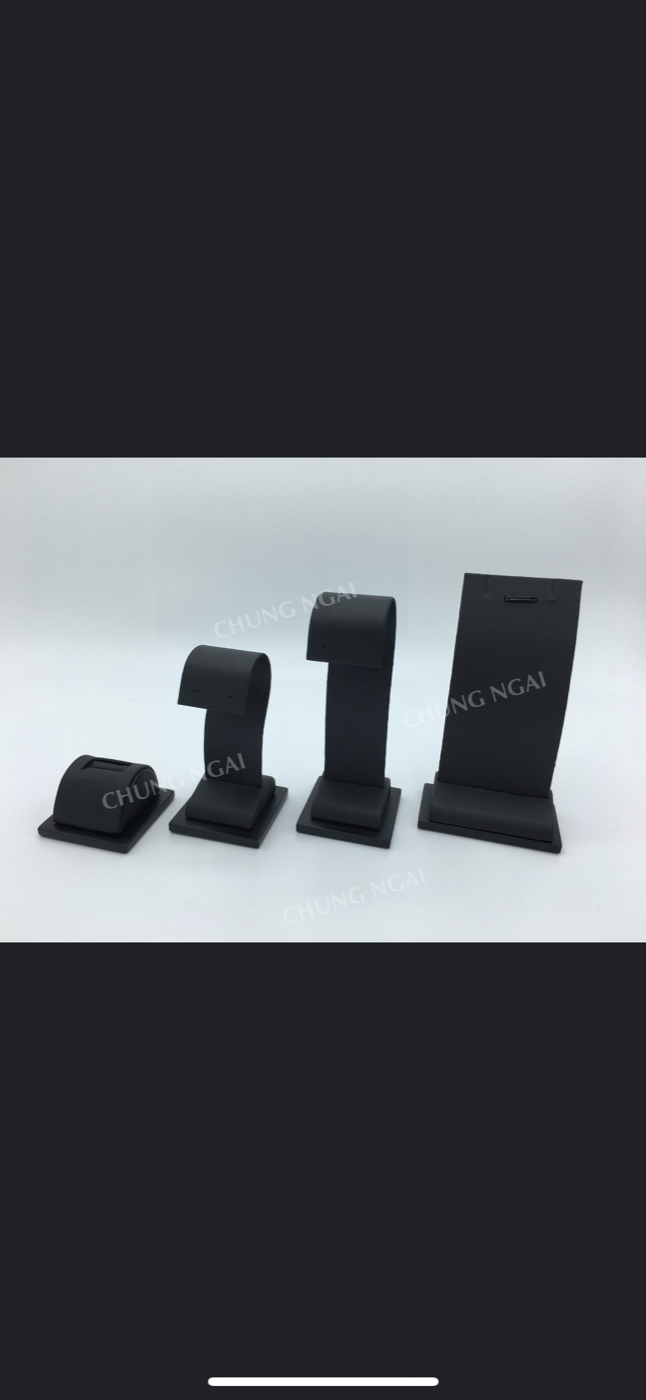
What it does
A counter pad is a soft faced mat laid on the counter, and a piece is put down on it rather than on glass. It is the one display item that exists for the transaction rather than for the window — it stops a ring skidding, it deadens the sound, and it frames the piece while a customer looks at it.
Lacquered wood on a counter pad, specifically
A wooden pad is a tray rather than a pad, and it needs a faced insert where the piece actually sits. The wood gives the weight that stops it sliding, which is the one thing fabric pads get wrong.
Getting the proportion right
Size is set by what is shown on it, not by the counter. A pad big enough for a tray reads as a mat; a pad sized to one piece reads as a stage, and the second is what most counters actually want.
How wood display is made
Wood is machined and finished rather than covered, so the shape is cut from solid or from a veneered core and then sealed. That makes tolerances tighter than on a wrapped form, and it makes changes after tooling more expensive.
Where it is used
Every selling counter, and particularly high-value counters where a piece is taken out of the case and put down in front of a customer.
Wood under case lighting
A satin-sealed wood surface throws a soft reflection that reads warm, which flatters gold and works against platinum. A matt seal removes most of that and is the safer specification for a mixed-metal case.
The mistake to avoid
A pad with no weight slides when a customer pulls it toward them. A weighted or non-slip base is the difference between a pad that stays put and one that ends up on the floor.
Why lacquered wood
Lacquered wood display has weight and it makes a sound when it is set down. It reads as furniture rather than as a prop.
Dust dry. A gloss lacquer shows fingerprints under window lighting; a satin lacquer does not.
What we need from you
| What we need | Why |
|---|---|
| Height and footprint | Size is set by what is shown on it, not by the counter. |
| Lacquered wood colour | Matched to a Pantone reference or a swatch |
| Lacquered wood on this form | A wooden pad is a tray rather than a pad, and it needs a faced insert where the piece actually sits. |
Frequently asked questions
Can counter pads be made in our brand colour?
Yes — the lacquered wood is matched to a Pantone reference or a physical swatch, and confirmed on a sample.
What sizes do counter pads come in?
They are made to your dimensions. Size is set by what is shown on it, not by the counter. A pad big enough for a tray reads as a mat; a pad sized to one piece reads as a stage, and the second is what most counters actually want.
Is lacquered wood a good choice for a counter pad?
A wooden pad is a tray rather than a pad, and it needs a faced insert where the piece actually sits. The wood gives the weight that stops it sliding, which is the one thing fabric pads get wrong.
What goes wrong most often with counter pads?
A pad with no weight slides when a customer pulls it toward them. A weighted or non-slip base is the difference between a pad that stays put and one that ends up on the floor.
Can counter pads be made to match our boxes?
Yes — the same lacquered wood and the same colour across boxes and display, ordered in one run.
Specify your counter pads
Tell us your case or window height, what the counter pads have to show, and your brand colour. We’ll send photos of our work and one clear, all-in quote.